
What Is VR Replacing? How Virtual Reality Enhances Rather Than Replaces Real Life

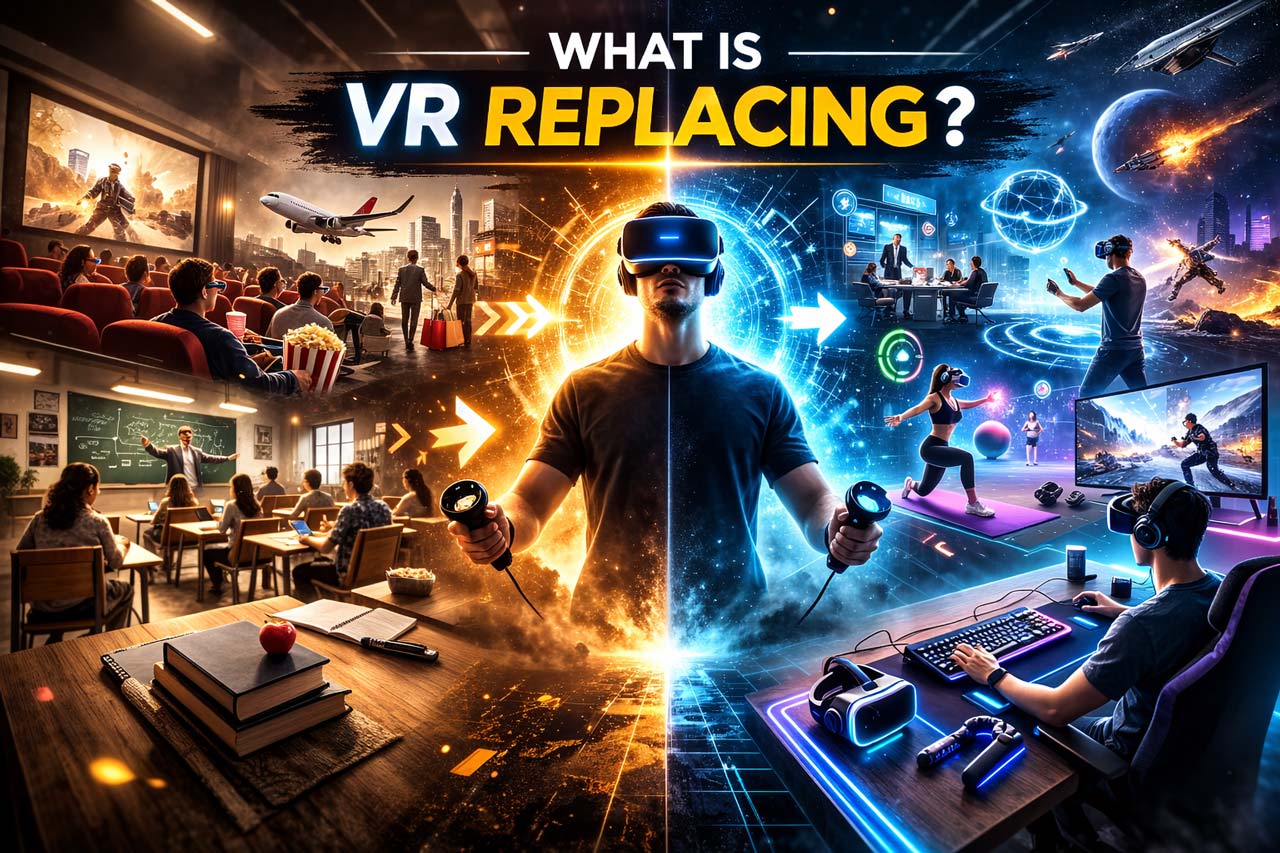
The rise of virtual reality has sparked debate about whether immersive technology will someday replace real‑world experiences. From gaming and socializing to training and therapy, VR permeates many aspects of our lives. But despite its growing influence, VR is not poised to replace reality; instead, it augments and enhances our interactions. This article examines what VR is—and isn’t—replacing and how it fits alongside our daily lives.
VR vs. Real Life: A Complement, Not a Substitute
Some fear that VR could lead to isolation, drawing people away from the physical world. In practice, VR supplements our reality rather than replacing it. A blog exploring VR experiences argues that virtual reality cannot replicate the full richness of real life. Real‑world interactions involve unpredictable social cues, scents, textures and environmental variables that headsets cannot fully emulate. VR can provide realistic visual and auditory experiences, but it falls short in tactile, olfactory and emotional complexity. Therefore, VR is better viewed as an enhancement—an additional layer of experiences—not a replacement.
Industries Being Transformed
Though VR may not replace reality, it is reshaping how we perform certain tasks. Research highlights several sectors where VR offers significant benefits:
· Education and Training: VR enables immersive simulations for medical procedures, pilot training and safety drills, offering hands‑on practice without real‑world risks.
· Therapy and Rehabilitation: Therapists use VR to treat phobias, PTSD and pain management by controlling environments and gradually exposing patients to stimuli.
· Manufacturing and Design: Engineers employ VR to visualize prototypes and conduct virtual walkthroughs, reducing development costs and time.
· Entertainment and Social Interaction: Gaming, concerts and social platforms let people connect across distances and explore creative worlds together.
· Healthcare and Surgery: Surgeons practice complex operations in VR before performing them on patients, improving skills and outcomes.
Despite these advances, VR applications complement traditional methods instead of replacing them. For example, VR training enhances but does not replace real‑world practice; surgeons still operate on real bodies, and pilots still fly physical aircraft after simulator training.
Why VR Won’t Replace Reality
1. Physical Sensations Are Irreplaceable: VR lacks the full spectrum of sensory input, including smell, touch and temperature. Real‑world experiences remain richer and more nuanced.
2. Human Connection: Spontaneous interactions, body language and emotional cues are hard to replicate digitally. VR social spaces can feel engaging, but they still differ from in‑person meetings.
3. Health Considerations: Extended VR use may cause eye strain, motion sickness or social isolation. Balancing VR with physical activity and human contact is important.
4. Access and Cost: High‑end headsets and powerful PCs remain expensive. VR adoption is growing, but it is not universally accessible yet.
5. Early Development Stage: According to a comprehensive review, VR is still at an early stage of adoption and will need to mature before becoming widespread.
Virtual reality is not replacing reality; it’s expanding our toolbox for communication, learning and entertainment. By acknowledging VR’s limitations and leveraging its strengths—immersive simulations, remote collaboration and creative storytelling—we can enrich our lives without abandoning the physical world. VR’s future lies not in replacing, but in complementing the experiences that make us human.
FAQ
Q1: Will VR replace real life?
No. VR cannot replicate all the sensory and emotional components of the physical world. It supplements reality by offering new ways to experience content and interact with people.
Q2: What industries is VR changing?
VR is transforming education, training, healthcare, design, entertainment and therapy. It enhances these fields but does not eliminate traditional methods.
Q3: Can VR replace cinemas or gaming consoles?
VR offers immersive alternatives to traditional media, but it doesn’t fully replace cinemas or consoles. It adds new options rather than replacing existing ones.